Setup MongoDB for Node project

Go to https://www.mongodb.com and click
Try FreebuttonClick on signup with Google or fill out the given form and accept permission
Fill in the answer to all questions { you can select any options according to your own thought}
You can see an interface like this
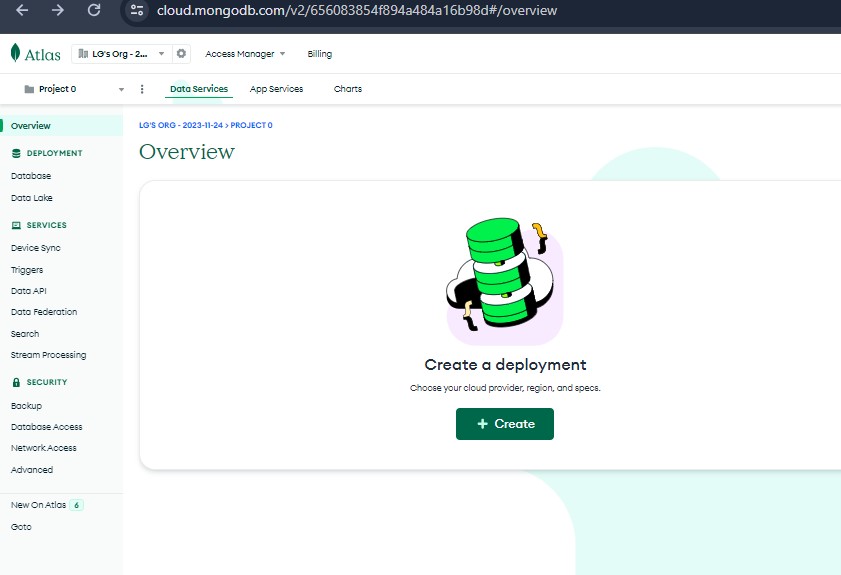
Click on
Createbutton to create a new deployment environmentSelect
M0 FREEdatabase package as shown below: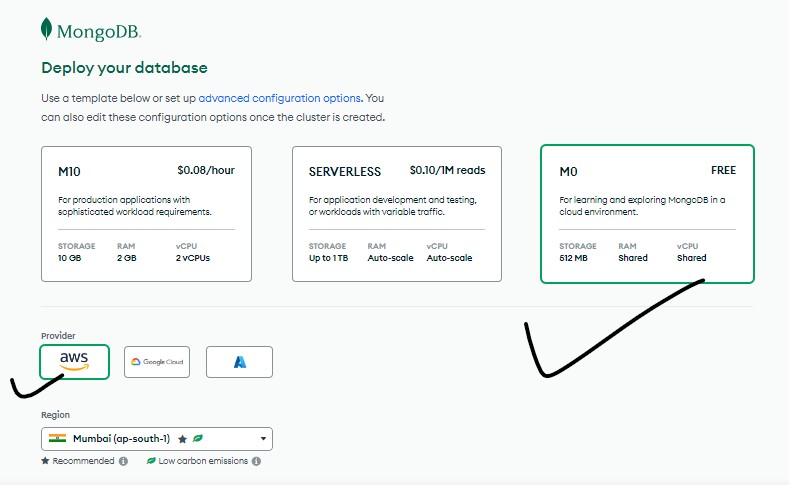
You can also select other Region for better performance
Give the Name of your Cluster, then click
Create
Also, please Create a username and Password of your choice, copy the password, and save it to Notepad for further use

After copying click on
Create Userbutton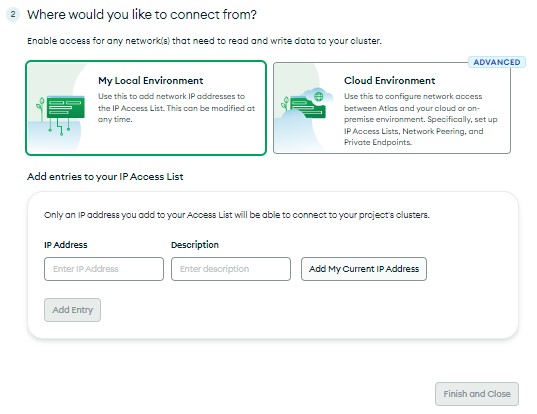
Here click
Add My Current IP Addressand thenFinish and CloseAfter some time your Cluster will be ready and look like when you click
Databaseat the left bar
After that Click
Connectand do followingClick
MongoDB for VS Code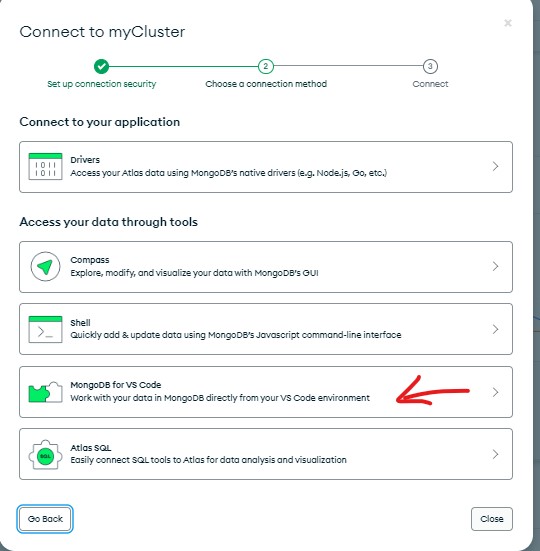
Copy the marked command and close the terminal

Now open the VS code and go to the Extensions to download

Now you can see the symbol of MongoDB at the left sidebar
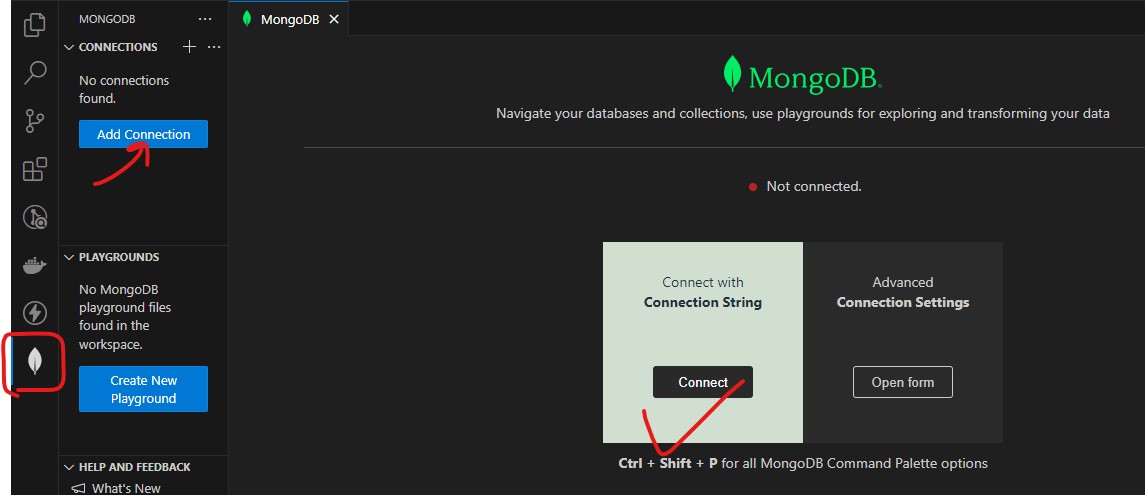
Click
Add Connection-> thenConnectPaste the copied command from above and replace <password>, then the new command looks like the following
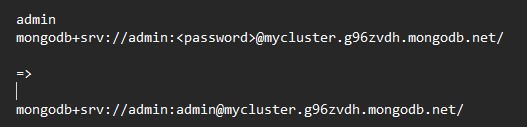

Press enter. MongoDB connected Successfully
Create Database
Click
(+)icon and it automatically opens a file
Edit the file as follows and run by pressing the play button at the top right corner
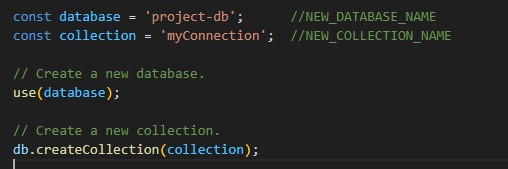
Now you can use MongoDB with ease.

